
Can Stem Cells Regrow Knee Cartilage? What the Studies Actually Show
2026-09-28 · 8 min read
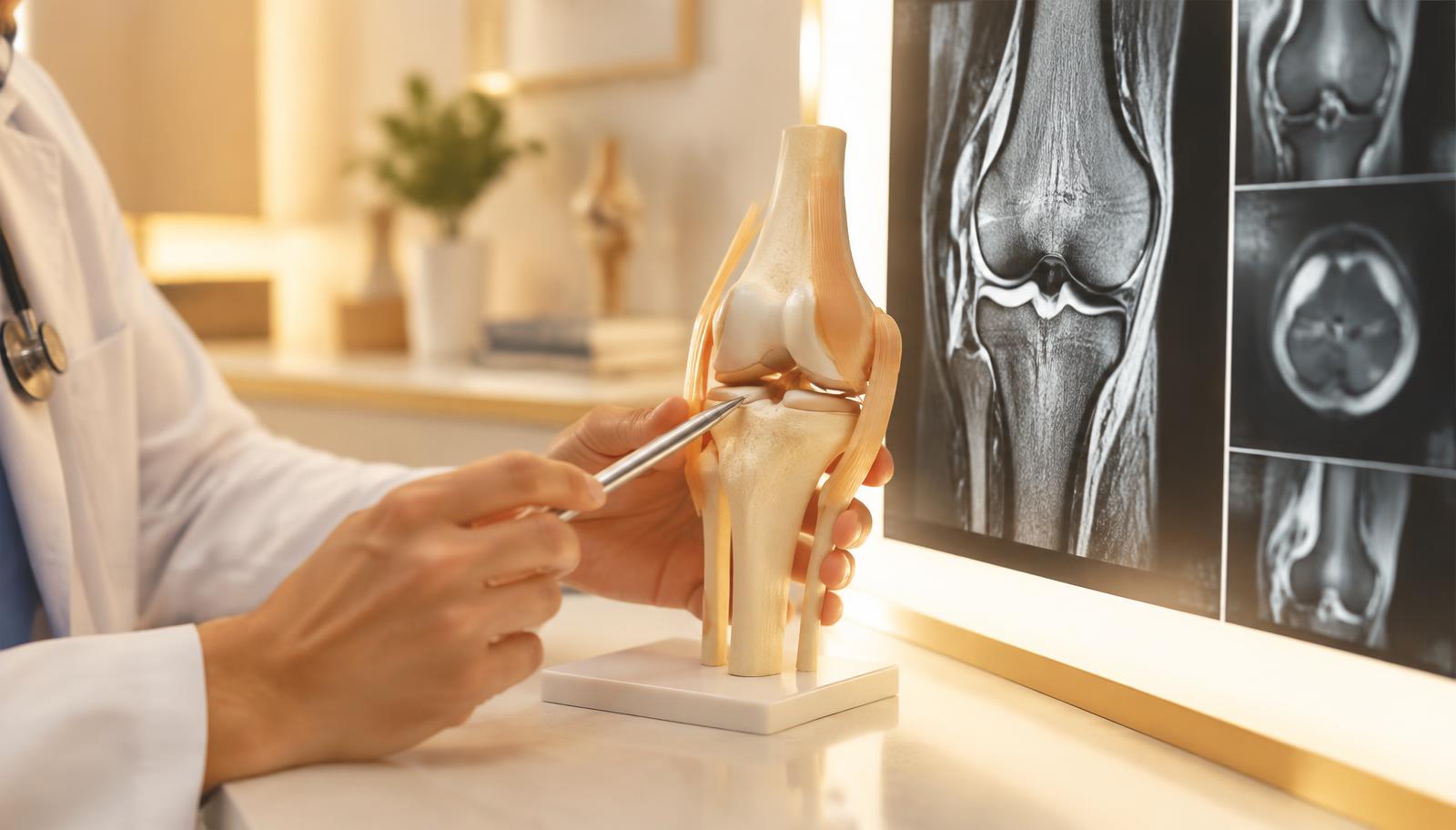
'Regrow my cartilage' is the promise many people hope stem cells deliver. Here is what the research actually shows — and where honest uncertainty begins.
Medically reviewed by the Bangkok Stem Cell Center medical team
Cartilage loss is the heart of most knee trouble. Once the smooth, slippery surface that lets the joint glide wears thin, every step gets a little less comfortable, and the usual question follows close behind: can anything make the cartilage grow back? Stem cell therapy is often presented as the answer. This article looks carefully at what the research does and does not show about cartilage regeneration — without the hype from either direction.
Why cartilage is so hard to heal
Cartilage is a unique tissue. It has no blood vessels running through it, so the repair cells and nutrients that rush to a skin wound or a broken bone simply are not delivered to cartilage in the same way. Its cells — chondrocytes — sit isolated in a dense matrix and divide very slowly. That is why a piece of torn cartilage may sit unchanged for years, and why the body rarely rebuilds a worn surface on its own.
There is also a difference between a small, localised defect and widespread wear. A young athlete with a punch-cartilage injury from a twist or tackle has a very different problem from a person in their sixties whose cartilage has thinned gradually across the whole joint. Research into regenerative treatments reflects that difference, and results are generally better for the first group.
What the studies have looked for
Researchers studying cell-based knee treatments measure two different things. The first is what patients feel: pain, stiffness, and function. The second is what imaging shows: whether the cartilage layer itself has thickened, whether new tissue has filled a defect, or at minimum whether further breakdown has slowed. These are not the same outcome, and it matters which one a study reports.
On the symptoms side, the picture is reasonably consistent. Multiple randomised trials and reviews of mesenchymal stromal cell (MSC) injections in knee osteoarthritis have reported meaningful pain relief and better function lasting months to a couple of years in many patients. On the imaging side, the picture is more modest — and this is where honest reporting matters.
What imaging actually shows
- Some studies using MRI have reported modest thickening or improved quality of remaining cartilage after cell therapy, particularly in knees with mild to moderate wear.
- A smaller number of second-look arthroscopies have described repair-like tissue filling localised cartilage defects.
- Other well-designed trials have found symptom improvement without measurable change in cartilage volume on imaging.
- No high-quality study has shown a worn-out knee surface being restored to a normal, full-thickness cartilage layer.
The most likely explanation for the gap between symptom relief and imaging change is that the cells are doing something real, but it is not wholesale regeneration. MSCs release signals that calm inflammation inside the joint, and much of the pain of a worn knee comes from that inflamed environment rather than from the cartilage loss alone. A quieter joint feels better, even if the surface itself has changed little.
So is 'regeneration' the right word?
Most honest researchers would say no — not in the way advertisements use it. A fair description is that cell therapy may support the joint environment, slow degeneration in some patients, and in select cases encourage limited repair activity in damaged cartilage. Claiming that injections regrow a new knee surface overstates what the evidence shows, and any clinic making that promise should be treated with caution.
Who is most likely to benefit
- People with mild to moderate osteoarthritis, where viable cartilage cells remain to respond to the signals
- Patients with a localised cartilage or meniscal defect in an otherwise healthy joint
- Those whose main driver of pain is inflammation inside the joint
- People who combine treatment with strengthening and load management, rather than expecting the injection to do everything
By contrast, a knee with little remaining cartilage, significant deformity, or mechanical instability has far less to work with. In those situations the honest conversation is usually about surgical options, with cell therapy playing at most a supporting role.
Questions worth asking any clinic
- What outcome do you realistically expect in my case — symptom relief, slowing progression, or tissue change?
- Will my results be tracked with imaging, and how?
- What is the cell source, and how are the cells prepared and quality-checked?
- What happens if I do not improve — what is the next step in the plan?
The honest bottom line
Stem cell therapy for knee cartilage is best described as regeneration support, not cartilage regrowth. The evidence for meaningful, lasting symptom relief in the right patient is encouraging. The evidence for rebuilding a worn joint surface simply is not there yet. If your goal is to stay active and postpone or possibly avoid surgery while your knee still has biological potential, cell therapy is a reasonable option to discuss with a qualified clinician who will show you the evidence rather than just the marketing.
Frequently asked questions
Short, plain answers to the questions patients ask most — so you can read with clear expectations, not promises.
Can stem cells actually regrow knee cartilage?
Honestly: not in the way advertisements suggest. No high-quality study has shown a worn-out knee surface being restored to a normal, full-thickness cartilage layer. Some imaging studies have found modest improvements in cartilage quality, especially in knees with mild to moderate wear, and trials consistently show meaningful pain relief and better function. The fair description is regeneration support — calming inflammation and supporting the joint you still have — not regrowing a new joint surface.
How long does the pain relief usually last?
In published studies of cell-based knee injections, many patients report meaningful improvement lasting from several months up to a couple of years. Duration varies widely between individuals and depends on how much wear the knee started with. Because the effect is not permanent, some protocols repeat treatment, and any honest clinician should explain what duration is realistic for your specific knee.
Am I a good candidate for knee stem cell therapy?
The strongest candidates tend to be people with mild to moderate osteoarthritis, good joint alignment, and cartilage cells that are still viable — confirmed on X-ray or MRI rather than on a pain score alone. A knee that is bone-on-bone, deformed, or mechanically unstable has far less to work with, and surgery is usually the more dependable conversation there. A proper assessment should always come before any recommendation.
Is stem cell therapy for the knee safe?
In clinical studies, cell-based knee injections have generally been well tolerated, with the most common effects being temporary swelling, stiffness or soreness in the joint. The more serious safety questions sit outside the injection itself: how the cells were sourced, processed and quality-checked. Treatment prepared without proper laboratory standards and medical oversight carries real infection and quality risks, so this is a question to ask any provider directly.
How soon will I notice a difference?
Gradually, in most cases. The cells work by changing the inflammatory environment inside the joint, which typically plays out over weeks to months rather than overnight. Some people notice early improvement in stiffness or night pain; others improve more slowly or less completely. If a clinic promises a specific result by a specific date, treat that as a warning sign rather than a reassurance.
Does having stem cell therapy rule out knee replacement later?
No. An injection-based treatment does not remove or alter the joint's anatomy the way surgery does, so a knee replacement remains fully available later if the arthritis progresses. This is precisely why many specialists consider biological treatment a reasonable first step in borderline cases — it may buy time, and it does not burn any bridges if surgery eventually becomes the right answer.
Reviewed by Bangkok Stem Cell Center Medical Team | Last updated: October 2026
Travelling to Bangkok During Cancer Treatment: A Medical Planning Checklist
Travel during cancer treatment requires more than a flight and hotel. This checklist helps patients coordinate records, medicines, safety and follow-up before leaving home.
Considering Cancer Immunotherapy in Bangkok? Questions to Ask Before You Travel
The word immunotherapy covers very different treatments. Before travelling, establish exactly what is proposed, why it fits the diagnosis, and who will manage complications.