
What Are NKT Cells, and Why Are Cancer Doctors Watching Them?
2026-11-12 · 7 min read
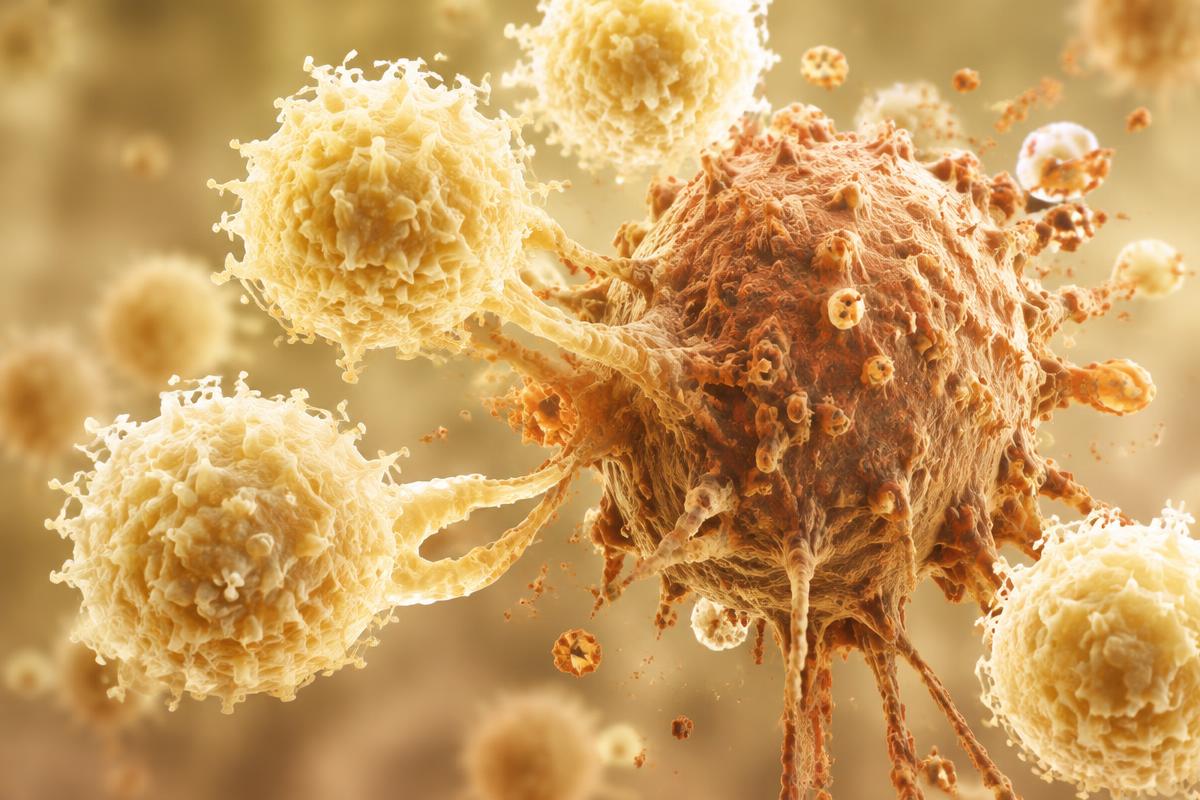
You have heard of NK cells and T cells. NKT cells sit between them, and researchers are curious about what they might add to cancer care.
Medically reviewed by the Bangkok Stem Cell Center medical team
Your oncologist mentioned immunotherapy, and while reading at night you came across three similar names: NK cells, T cells and NKT cells. The last one sounds like a typo. It is not. NKT cells are a small, unusual group of immune cells, and NKT cell therapy is now being explored in cancer research. This guide explains them in plain language.
NKT cells in one sentence
NKT cells, short for natural killer T cells, are immune cells that carry features of both T cells and natural killer (NK) cells. Like T cells they have a receptor that recognises specific signals. Like NK cells they can respond quickly, without weeks of training.
How NKT cells differ from NK and T cells
- T cells learn to recognise particular protein pieces and build a targeted, long-lasting response.
- NK cells act fast, spotting cells that look stressed or abnormal, including some cancer cells.
- NKT cells recognise fat-based molecules and, once switched on, release signals that can rally other immune cells.
That last point is why NKT cells interest cancer doctors. They may act less like a single soldier and more like a messenger who wakes up the wider immune system.
Why NKT cell therapy is being studied in cancer care
Some tumours seem to lower the number or activity of NKT cells. Researchers are testing whether boosting these cells, growing them in a laboratory, or combining them with other treatments can help the body respond to cancer. Our page on NK and NKT cell immunotherapy summarises how these approaches are delivered.
What NKT cell therapy cannot promise yet
Most work on NKT cell therapy is still in early clinical trials. It is not a replacement for surgery, chemotherapy, radiotherapy or approved immunotherapy, and no one can promise a particular result. Anyone offering a guaranteed outcome is a warning sign.
Questions to ask your oncologist
- Is NKT cell therapy relevant to my type and stage of cancer?
- Are there clinical trials I could join?
- How would it fit with the treatment I am already receiving?
- What side effects and costs should I expect?
If you want to understand how immune decline links to age, see our page on NK and NKT immune changes. You can also browse all treatment options or visit our Bangkok Stem Cell Center home page.
Frequently asked questions
Short, plain answers to the questions patients ask most — so you can read with clear expectations, not promises.
Are NKT cells the same as NK cells?
No. NKT cells share some features with NK cells but also carry a T-cell receptor, so they recognise different signals.
Is NKT cell therapy approved for cancer?
It is mainly offered in research settings. Ask your oncologist about its status for your specific cancer.
Can NKT cell therapy replace chemotherapy?
No. It is studied as a possible addition to standard care, not a substitute for it.
Where do the cells come from?
Approaches differ. Some use the patient's own cells grown in a laboratory, others use donor cells. Ask exactly which is used.
Is it safe?
Early studies focus on safety, but every treatment carries some risk. Your doctor should explain possible side effects clearly.
How do I find NKT cell trials?
Public registries such as ClinicalTrials.gov list ongoing studies. Your oncologist can help judge whether one suits you.
References
Published studies and medical guidelines this article draws on.
- National Cancer Institute. Natural killer cell (NCI Dictionary of Cancer Terms). cancer.gov, 2025
- National Cancer Institute. Immunotherapy to treat cancer. cancer.gov, 2025
- U.S. National Library of Medicine. ClinicalTrials.gov search: NKT cell studies. clinicaltrials.gov, 2026
- U.S. Food and Drug Administration. Consumer alert on regenerative medicine products including stem cells and exosomes. fda.gov, 2025
Reviewed by Bangkok Stem Cell Center Medical Team | Last updated: October 2026
NK or NKT Cell Therapy in Bangkok: Which Fits Your Cancer Care?
Two clinics, two similar names, one decision. Here is a side-by-side look at NK and NKT cell therapy for patients considering Bangkok.
Exhausted After Chemo? How Immune Support Fits Into Cancer Recovery
Treatment ended, but the tiredness did not. A practical guide to fatigue, infection risk and immune support after chemotherapy.