
CAR-T Cell Therapy Explained: How Engineered Immune Cells Fight Cancer
2026-09-03 · 10 min read
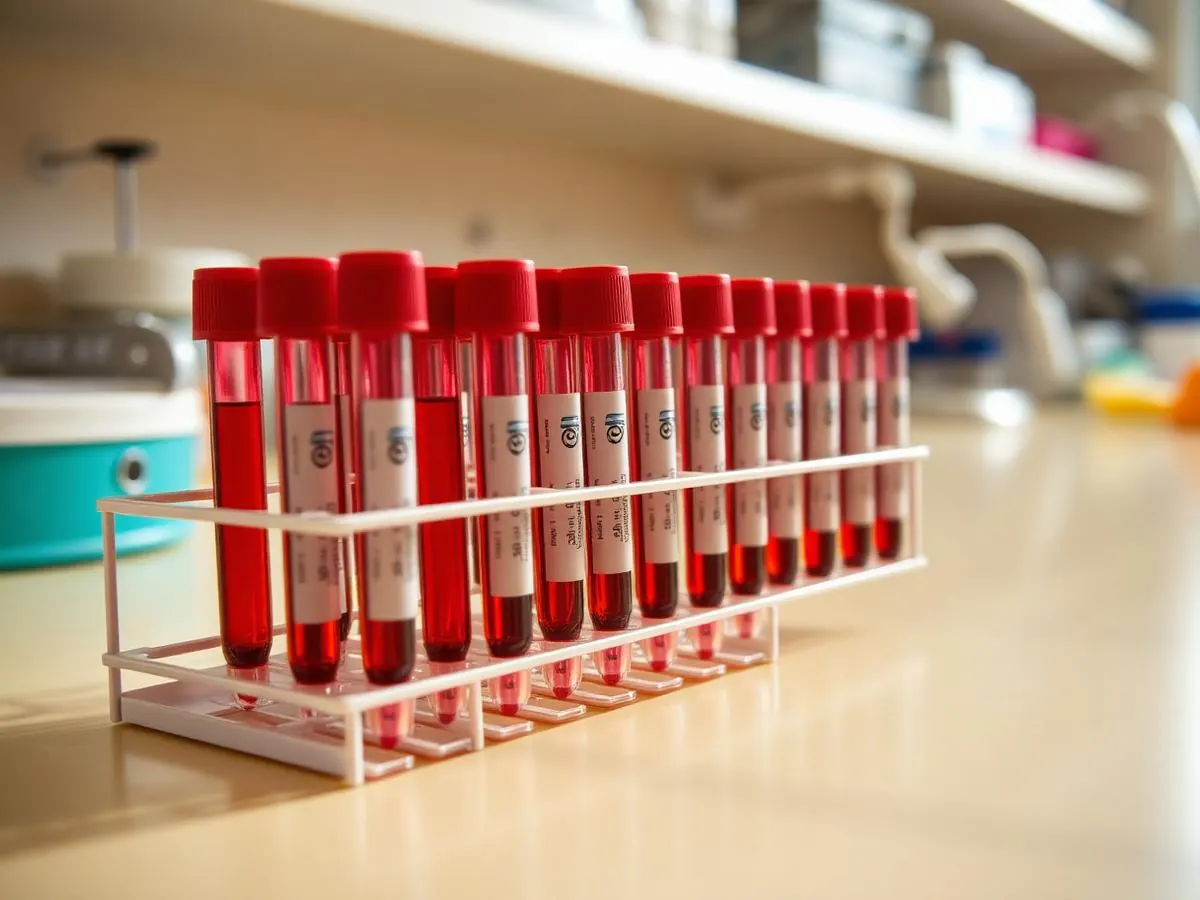
It is one of the most talked-about cancer treatments of the last decade, and one of the least understood. Here is what CAR-T actually is, in language a patient can follow.
Medically reviewed by the Bangkok Stem Cell Center medical team
CAR-T cell therapy is often described in headlines as a living drug. That phrase is unusually accurate. Rather than giving a patient a chemical that circulates and then clears, CAR-T takes the patient's own immune cells, rewrites part of their instructions in a laboratory, and returns them to the body where they continue to divide, hunt and act — sometimes for years. This article explains how that works, what it can and cannot treat, and what the experience is actually like.
Start with the T cell
The immune system contains a class of white blood cells called T cells. Their job is surveillance: they move through blood and tissue inspecting other cells and destroying those that look wrong — virus-infected cells, and, in principle, cancer cells.
Each T cell carries a receptor on its surface, a kind of molecular fingerprint reader. If the receptor recognises a suspicious fragment displayed by another cell, the T cell attacks. It is a precise system, and for most of a person's life it works quietly in the background.
Cancer survives by defeating that system. Tumour cells stop displaying recognisable fragments, release signals that exhaust nearby T cells, and build a local environment that suppresses immune activity. The immune system is not absent in a cancer patient; it has been outmanoeuvred.
What the 'CAR' actually is
CAR stands for chimeric antigen receptor. Chimeric means assembled from parts of different origins — in this case, a receptor built from an antibody fragment fused to the internal signalling machinery of a T cell.
The antibody fragment sits outside the cell and is chosen to lock onto a specific protein found on the surface of the cancer cell. The internal portion is the trigger: when the outside half binds its target, the inside half fires the T cell's full killing program. The result is a T cell that no longer depends on the cancer displaying fragments correctly. It recognises the tumour directly.
The target protein matters enormously. In the most established CAR-T products the target is CD19, a protein carried by B cells — including malignant B cells in certain leukaemias and lymphomas. Other approved products target BCMA, found on the plasma cells that become malignant in multiple myeloma.
How the cells are made
The manufacturing sequence is the same across most commercial products, and understanding it explains why the treatment takes weeks rather than days.
- Collection (leukapheresis): blood is drawn through a machine that separates out white blood cells and returns the rest. It takes a few hours and is not painful, though patients often describe it as tedious.
- Selection and activation: in the manufacturing facility, T cells are isolated from the collected mixture and stimulated so they begin dividing.
- Genetic modification: a disabled viral vector, unable to cause infection, delivers the genetic instructions for the chimeric receptor into the T cells. The cells begin producing the new receptor themselves.
- Expansion: the modified cells are grown until there are hundreds of millions of them.
- Testing and release: sterility, identity, potency and cell counts are verified against written specifications before the batch is cryopreserved and shipped back.
The whole process typically takes two to four weeks. During that window many patients receive bridging therapy — conventional treatment intended to hold the disease steady until the engineered cells are ready.
The lymphodepletion step, and why it exists
Shortly before the cells are infused, patients receive a short course of chemotherapy known as lymphodepletion, usually fludarabine with cyclophosphamide. It is not intended to kill the cancer. Its purpose is to clear space.
The immune system is a crowded ecosystem competing for growth signals. By temporarily thinning the existing T cell population, lymphodepletion allows the infused CAR-T cells to expand far more aggressively once they arrive. Studies consistently show better expansion, and better outcomes, when this step is done properly.
The infusion itself is anticlimactic
Patients often expect the infusion to be dramatic. It usually is not. The thawed cells are given through a standard intravenous line and the process takes perhaps thirty minutes. There is no radiation, no operating theatre, no immediate sensation of anything happening.
The significant events come afterwards, as the cells begin to multiply inside the body — often expanding a thousandfold over the following one to two weeks. That expansion is the treatment working, and it is also the source of the side effects that require close monitoring.
Cytokine release syndrome
As CAR-T cells engage cancer cells at scale, they release cytokines — the immune system's chemical messengers. A large, rapid release produces cytokine release syndrome, or CRS. It is the most common serious side effect of CAR-T therapy and it is expected rather than accidental.
Mild CRS looks like a severe flu: fever, aching, fatigue, low blood pressure. Severe CRS can affect breathing, kidney function and circulation, and requires intensive care support. Crucially, it is now well understood and largely manageable. Tocilizumab, an antibody that blocks the interleukin-6 signalling pathway, reverses most cases quickly, and corticosteroids are added when needed.
Timing is fairly predictable: CRS typically begins within the first week and resolves within one to two weeks. This is why treatment centres keep patients nearby, often requiring them to stay within a short distance of the hospital for several weeks and to have a caregiver present at all times.
Neurological effects (ICANS)
The second characteristic toxicity is immune effector cell-associated neurotoxicity syndrome, usually shortened to ICANS. Patients may become confused, struggle to find words, develop tremor or handwriting changes, and in severe cases experience seizures or reduced consciousness.
It sounds alarming, and for families watching it is genuinely distressing. The important point is that ICANS is nearly always temporary. Teams monitor for it with simple daily assessments — asking the patient to name objects, write a sentence, state the date — because subtle changes appear before serious ones. Treated promptly with steroids and supportive care, the large majority of cases resolve completely.
Longer-term effects worth understanding
Because CD19 is present on healthy B cells as well as malignant ones, successful CAR-T therapy usually eliminates normal B cells too. This is called B cell aplasia, and it lowers antibody levels. Many patients need periodic immunoglobulin replacement infusions afterwards, sometimes for years, and remain more vulnerable to infection.
Blood counts can also stay low for months, and regulators continue to monitor rare reports of secondary cancers arising after treatment. These are real considerations, and they are weighed against the alternative: most patients receiving CAR-T have already exhausted several lines of standard therapy.
Which cancers it currently treats
Approved CAR-T products concentrate in blood cancers, and this is not arbitrary. Blood cancers circulate, which means the engineered cells meet their targets easily, and they carry clean, uniform surface markers such as CD19 and BCMA.
- B-cell acute lymphoblastic leukaemia, particularly in children and young adults
- Diffuse large B-cell lymphoma and other aggressive B-cell lymphomas
- Follicular lymphoma and mantle cell lymphoma
- Chronic lymphocytic leukaemia in selected cases
- Multiple myeloma, using BCMA-directed products
Response rates in relapsed disease have been striking. In several registration trials, a majority of patients whose cancer had returned after multiple treatments achieved complete remission — an outcome that was, before CAR-T, close to unheard of in that population. A meaningful subset of those remissions has now lasted more than five years.
Why solid tumours remain difficult
The obvious question is why CAR-T has not transformed breast, lung, pancreatic or colorectal cancer. Three barriers explain most of it.
- Target selection: solid tumours rarely carry a surface protein that healthy tissue lacks entirely. Attacking a shared protein risks serious damage to normal organs.
- Physical access: engineered cells must leave the bloodstream, cross abnormal tumour blood vessels and penetrate dense supporting tissue — a journey circulating leukaemia cells never require.
- The tumour microenvironment: solid tumours actively suppress immunity, starving arriving T cells of oxygen and nutrients and switching them off through inhibitory signals.
Research groups are addressing each barrier: armoured CAR-T cells engineered to secrete their own supportive cytokines, dual-target designs that require two proteins before firing, logic gates that switch cells off in healthy tissue, and local delivery directly into a tumour or body cavity. Early trials in glioblastoma, mesothelioma and certain gastrointestinal cancers have produced genuine responses, though nothing yet matching the results seen in blood cancers.
What is changing next
Three directions dominate current development. Allogeneic or off-the-shelf CAR-T uses cells from healthy donors, edited to avoid rejection, which would remove the manufacturing wait entirely. In vivo engineering aims to modify T cells inside the body using targeted delivery particles, eliminating the laboratory step. And CAR technology is being applied beyond oncology altogether — early studies in severe autoimmune disease have used CD19-directed cells to reset a malfunctioning B cell population, with results that surprised many researchers.
Alongside this, trials continue to move CAR-T earlier in treatment sequences rather than reserving it for patients who have already relapsed repeatedly, on the reasonable theory that a less exhausted immune system produces better engineered cells.
Reading the field honestly
CAR-T is one of the genuine breakthroughs of modern oncology, and it is also narrow, expensive, logistically demanding and toxic enough to require specialist centres. Both statements are true. Remissions that would not otherwise have happened are now routine in specific diseases; for most cancer diagnoses worldwide, CAR-T is not currently an option.
For anyone reading this in relation to their own diagnosis or a family member's, the practical takeaway is that eligibility is a detailed question — disease type, prior treatments, organ function, disease burden and access to an accredited centre all matter. Those questions belong with the treating haematologist or oncologist who holds the full medical record.
A short glossary
- Antigen — a protein a receptor can recognise and bind to
- Autologous — made from the patient's own cells; allogeneic means from a donor
- Leukapheresis — the process of separating white blood cells from drawn blood
- Lymphodepletion — short chemotherapy given before infusion to make room for the new cells
- CRS — cytokine release syndrome, the inflammatory reaction as the cells expand
- ICANS — the neurological syndrome that can accompany or follow CRS
- Remission — no detectable disease; not the same as a guaranteed cure
This article is general education about a class of cancer treatment and is not medical advice, an offer of treatment, or a substitute for a discussion with a qualified oncology team.
Reviewed by Bangkok Stem Cell Center Medical Team | Last updated: October 2026
Travelling to Bangkok During Cancer Treatment: A Medical Planning Checklist
Travel during cancer treatment requires more than a flight and hotel. This checklist helps patients coordinate records, medicines, safety and follow-up before leaving home.
Considering Cancer Immunotherapy in Bangkok? Questions to Ask Before You Travel
The word immunotherapy covers very different treatments. Before travelling, establish exactly what is proposed, why it fits the diagnosis, and who will manage complications.