Worried About Cancer? What Actually Lowers Your Risk
2026-10-19 · 8 min read
A large share of cancers are linked to things we can change. The list of what actually works is shorter than the internet suggests — and more powerful.
Medically reviewed by the Bangkok Stem Cell Center medical team
Ask a room of people what causes cancer and the answers scatter everywhere: stress, microwaves, deodorant, sugar, bad luck. Ask what prevents it and the answers get stranger still — alkaline water, apricot kernels, expensive supplement stacks. Meanwhile, the factors with the strongest evidence sit in plain sight, unglamorous and mostly free. The World Health Organization estimates that between a third and a half of cancers are preventable through the risk factors we already understand. This article separates what genuinely moves the needle from what merely sells.
First, understand what cancer risk actually is
Cancer begins when DNA damage in a cell accumulates faster than the body can repair or remove it — a process explained in detail in our article on how cancer happens. Some of that damage is random chance, some is inherited, and a substantial share comes from exposures we can influence. Prevention is not about eliminating risk — nobody can do that — but about stacking the odds. Every avoided exposure is fewer rolls of the dice.
The measures with the strongest evidence
- Not smoking — the single largest preventable cause of cancer worldwide. Quitting at any age reduces risk, and the risk of several cancers falls steadily the longer someone stays quit.
- Limiting alcohol — alcohol is an established cause of cancers of the mouth, throat, oesophagus, liver, breast and bowel, and risk rises with the amount. There is no completely safe level; less is better.
- Maintaining a healthy weight — excess body fat is linked to at least a dozen cancer types, including breast (after menopause), bowel, kidney, liver and pancreatic cancers.
- Being physically active — regular activity independently lowers the risk of several cancers, beyond its effect on weight.
- Sun protection — ultraviolet radiation is the main cause of skin cancers, including melanoma. Shade, clothing and sunscreen matter far more than any after-the-fact cream.
- Vaccination — the HPV vaccine prevents the great majority of cervical cancers and several others; the hepatitis B vaccine prevents the infection behind much of the world's liver cancer.
- Treating chronic infections — hepatitis B and C, H. pylori and HPV are treatable or manageable infections that quietly raise cancer risk when ignored.
What about diet?
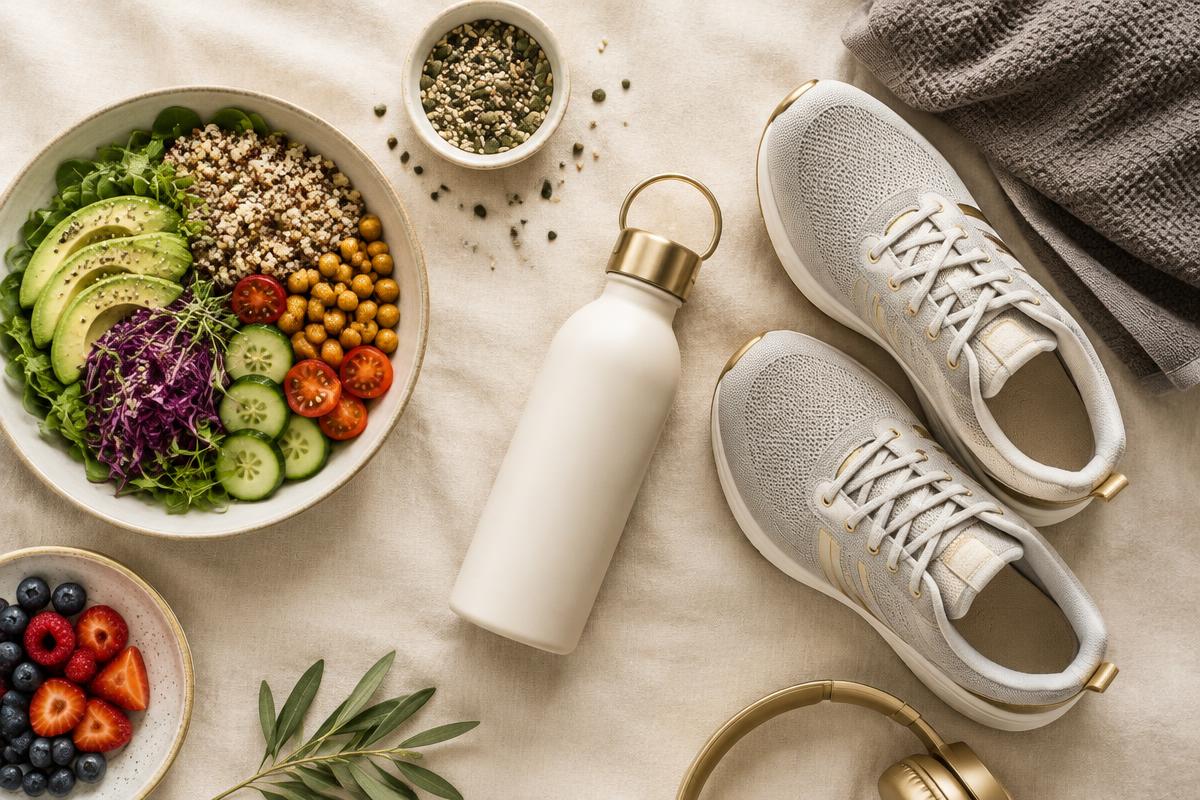
Diet advice is where prevention marketing gets loudest and evidence gets thinnest. What the evidence supports is a pattern, not a product: plenty of vegetables, fruit, whole grains and legumes; limited processed meat (an established cause of bowel cancer), red meat in moderation; limited sugary drinks and heavily processed foods. No single food prevents cancer, and no single food causes it. The people selling a specific berry, mushroom or powder as protection are selling a story the evidence doesn't tell.
The claims to be careful with
- Antioxidant supplement megadoses — large trials not only failed to show protection; some found high-dose beta-carotene increased lung cancer risk in smokers. Food sources and pills are not interchangeable.
- "Detox" programmes — the liver and kidneys detoxify the body continuously; a juice cleanse adds nothing except cost.
- Alkaline diets — blood pH is tightly controlled by the body and cannot be meaningfully changed by food; the premise is physiology that doesn't exist.
- Apricot kernels, laetrile and similar "natural cures" — ineffective in studies and capable of causing cyanide poisoning.
- Any product that claims to "boost immunity" against cancer generally — the immune system's relationship with cancer is specific and complex, which is why real cancer immunotherapy is engineered in laboratories, not blended into smoothies.
The other half of prevention: finding things early
Primary prevention lowers the chance cancer ever starts; screening lowers the chance it is found late. The two work together. Someone who never smokes, keeps a healthy weight, stays active, drinks little, protects their skin, takes the relevant vaccines — and still attends screening appropriate to their age — has done essentially everything evidence currently offers. That combination is more powerful than any product on any shelf.
The honest bottom line on cancer prevention
Cancer prevention is not a mystery and it is not a marketplace. The proven list is short: don't smoke, drink little or nothing, keep a healthy weight, move regularly, protect your skin, take the HPV and hepatitis B vaccines, treat chronic infections, eat a broadly plant-forward diet, and attend screening. None of it is exotic, and none of it can be bottled — which is precisely why the bottled versions should be treated with suspicion.
Frequently asked questions
Short, plain answers to the questions patients ask most — so you can read with clear expectations, not promises.
What is the single most effective way to reduce cancer risk?
Not smoking. Tobacco is the largest preventable cause of cancer worldwide, linked to cancers of the lung, mouth, throat, bladder, pancreas and more. Quitting at any age reduces risk, and the benefit grows the longer a person stays quit.
Can diet alone prevent cancer?
No single food or diet prevents cancer. Evidence supports an overall pattern — plenty of vegetables, fruit, whole grains and legumes, limited processed meat and sugary drinks — as one factor among several. Products marketed as cancer-preventing superfoods have not held up in controlled studies.
Do antioxidant supplements lower cancer risk?
Large trials found no protective benefit from high-dose antioxidant supplements, and some found harm — high-dose beta-carotene increased lung cancer risk in smokers. Antioxidants from whole foods are part of a healthy diet; megadose pills are not a substitute.
Does stress cause cancer?
There is no good evidence that stress directly causes cancer. Chronic stress can push people toward behaviours that do raise risk — smoking, drinking, poor sleep, weight gain — so managing stress matters for health, but the direct link the wellness industry implies is not supported.
Which vaccines prevent cancer?
Two: the HPV vaccine, which prevents the great majority of cervical cancers plus several other cancers, and the hepatitis B vaccine, which prevents the chronic infection responsible for much of the world's liver cancer. Both are among the most effective cancer-prevention tools that exist.
If cancer runs in my family, is prevention pointless?
No. Only a minority of cancers are driven by strong inherited mutations, and even then, lifestyle factors and screening change outcomes. A family history is a reason to discuss earlier or more intensive screening with a doctor — and sometimes genetic counselling — not a reason to give up on prevention.
References
Published studies and medical guidelines this article draws on.
- National Cancer Institute. Cancer prevention overview (PDQ) — patient version. cancer.gov, 2025
- World Health Organization. Cancer fact sheet. who.int, 2025
- National Cancer Institute. What is cancer?. cancer.gov, 2025
Reviewed by Bangkok Stem Cell Center Medical Team | Last updated: October 2026
What Are NKT Cells, and Why Are Cancer Doctors Watching Them?
You have heard of NK cells and T cells. NKT cells sit between them, and researchers are curious about what they might add to cancer care.
NK or NKT Cell Therapy in Bangkok: Which Fits Your Cancer Care?
Two clinics, two similar names, one decision. Here is a side-by-side look at NK and NKT cell therapy for patients considering Bangkok.