
Visiting Bangkok With an Autistic Child: A Sensory and Routine Planning Guide
2026-09-30 · 8 min read
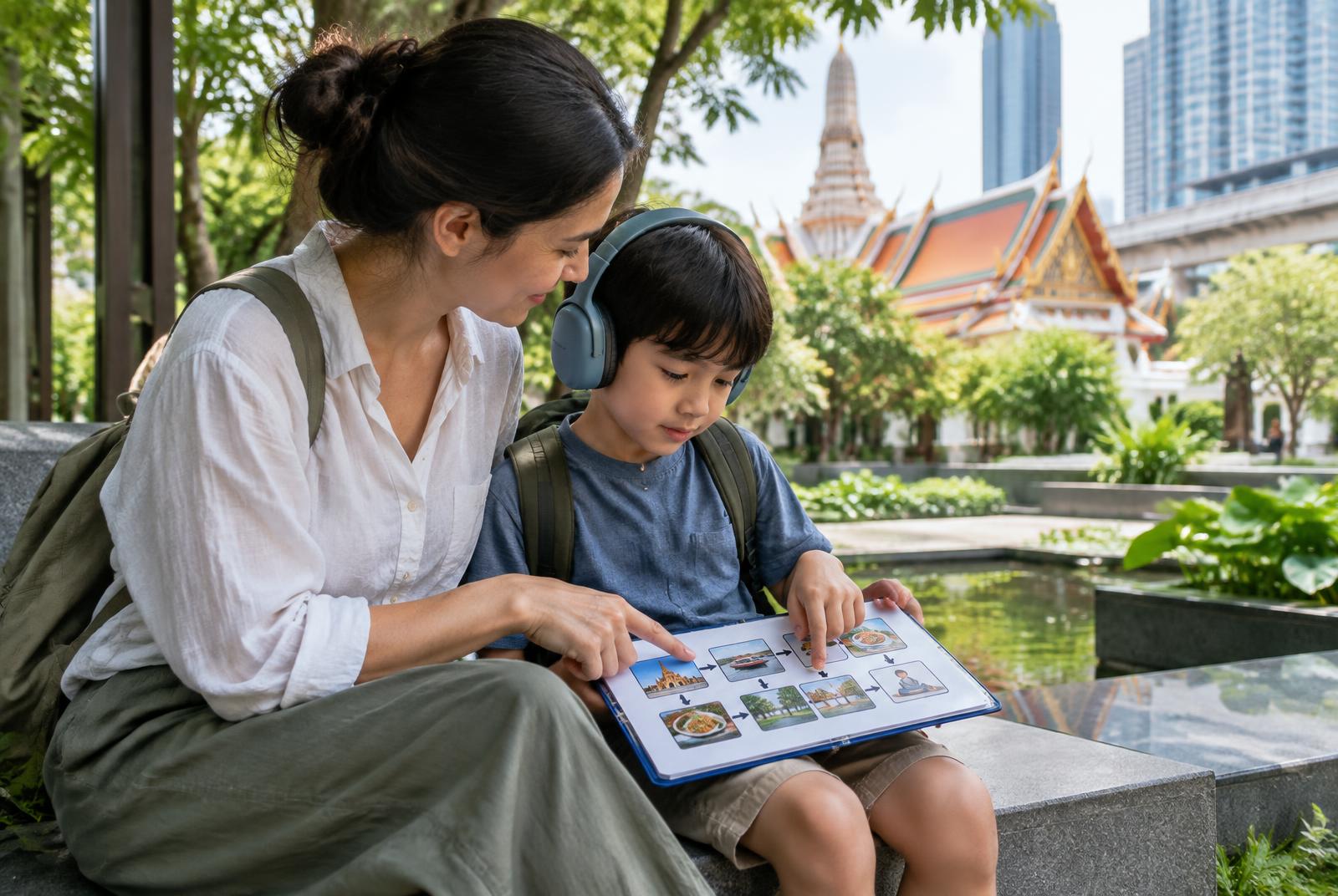
Bangkok can be bright, busy, hot and rewarding. Planning around one child’s communication, sensory profile and routines can make the visit more predictable and comfortable.
Medically reviewed by the Bangkok Stem Cell Center medical team
Autism is a neurodevelopmental difference, not an illness to cure. Autistic children vary widely in communication, sensory needs, interests and independence, so no single Bangkok itinerary works for every family. The useful starting point is the individual child: what helps them feel safe, what overwhelms them and how they communicate discomfort.
Prepare an autistic child for the Bangkok journey
A simple visual sequence can show the steps from home to airport, security, aircraft, immigration, hotel and the first planned activity. Photos of the actual airport, room, transport or clinic can reduce uncertainty. Rehearse unfamiliar steps when helpful, but leave room for delays rather than promising an exact sequence that travel cannot guarantee.
Pack sensory supports for Bangkok travel
- Noise-reducing headphones or familiar ear protection
- A preferred comfort item, activity or communication device
- Sunglasses, cap or other support for bright light
- Familiar snacks where travel rules allow
- A change of comfortable clothing and items needed for toileting
- A small card or digital note explaining communication needs when the family wants one
Plan for sensory intensity in Bangkok
Traffic, crowds, heat, sudden rain, strong food smells and amplified sound may accumulate even when each is manageable alone. Schedule fewer major activities than seems possible, build in a quiet return option and avoid making every meal or journey a new sensory challenge. Early visits and private or predictable transport may suit some children; others may enjoy trains and busy visual environments.
Keep autism-friendly routines while travelling
Keep a few anchors—perhaps wake time, a familiar breakfast, a preferred evening activity or the bedtime sequence. Use first-then language or a visual countdown for changes. When a plan must change, show what remains the same as well as what is different. A recovery period after a demanding outing is part of the itinerary, not a failed outing.
Prepare food and communication for an autistic child
Selective eating may become harder when brands, textures and smells change. Identify dependable foods near the accommodation and carry accepted snacks. Save written Thai translations of allergies or essential requests, while remembering that food preference and food allergy are different safety issues. Keep the child's usual communication system available and charged.
Make Bangkok healthcare visits more autism-friendly
- Tell the clinic about communication and sensory needs before arrival
- Ask whether a quieter waiting area or first appointment is possible
- Request a simple description or photos of the visit sequence
- Bring comfort items and allow extra transition time
- Explain how the child usually shows pain, fear or consent
- Do not remove access to communication as a way to gain cooperation
Bangkok travel with an autistic child: the honest bottom line
A successful Bangkok visit does not have to look busy. It is one in which the child can communicate, recover and participate at a tolerable pace. Build the plan around their known profile, keep communication available, create quiet exits and treat regulation needs as legitimate—not as behaviour to overcome.
Frequently asked questions
Short, plain answers to the questions patients ask most — so you can read with clear expectations, not promises.
Is Bangkok too overwhelming for an autistic child?
Not necessarily. The city can be intense, but a quieter schedule, predictable transport, sensory supports and planned recovery time can make it manageable. Suitability depends on the individual child.
How can we prepare for the flight?
Use a visual sequence, practise unfamiliar steps where useful, keep communication and comfort items accessible, and ask the airline or airport about available assistance before travel.
What should we tell a Bangkok clinic before an appointment?
Share communication methods, sensory triggers, signs of pain or overload, support needs and any adjustment that has helped in previous healthcare visits.
How can we handle selective eating?
Map reliable foods near the accommodation, carry accepted snacks where permitted and avoid scheduling every meal as a new experience. Communicate true allergies clearly and separately.
Should we keep the same routine as at home?
Keeping a few familiar anchors can help, but travel will create changes. Show those changes in advance where possible and include flexible quiet time rather than forcing a full schedule.
What if my child becomes overwhelmed in public?
Reduce demands, move to the pre-identified quieter place, offer the child's usual communication and regulation supports, and allow recovery time. Safety and regulation matter more than completing the planned activity.
Reviewed by Bangkok Stem Cell Center Medical Team | Last updated: October 2026
Travelling to Bangkok During Cancer Treatment: A Medical Planning Checklist
Travel during cancer treatment requires more than a flight and hotel. This checklist helps patients coordinate records, medicines, safety and follow-up before leaving home.
Considering Cancer Immunotherapy in Bangkok? Questions to Ask Before You Travel
The word immunotherapy covers very different treatments. Before travelling, establish exactly what is proposed, why it fits the diagnosis, and who will manage complications.