
Flying to Bangkok With Diabetes: Glucose, Insulin, and Medication Planning
2026-09-30 · 8 min read
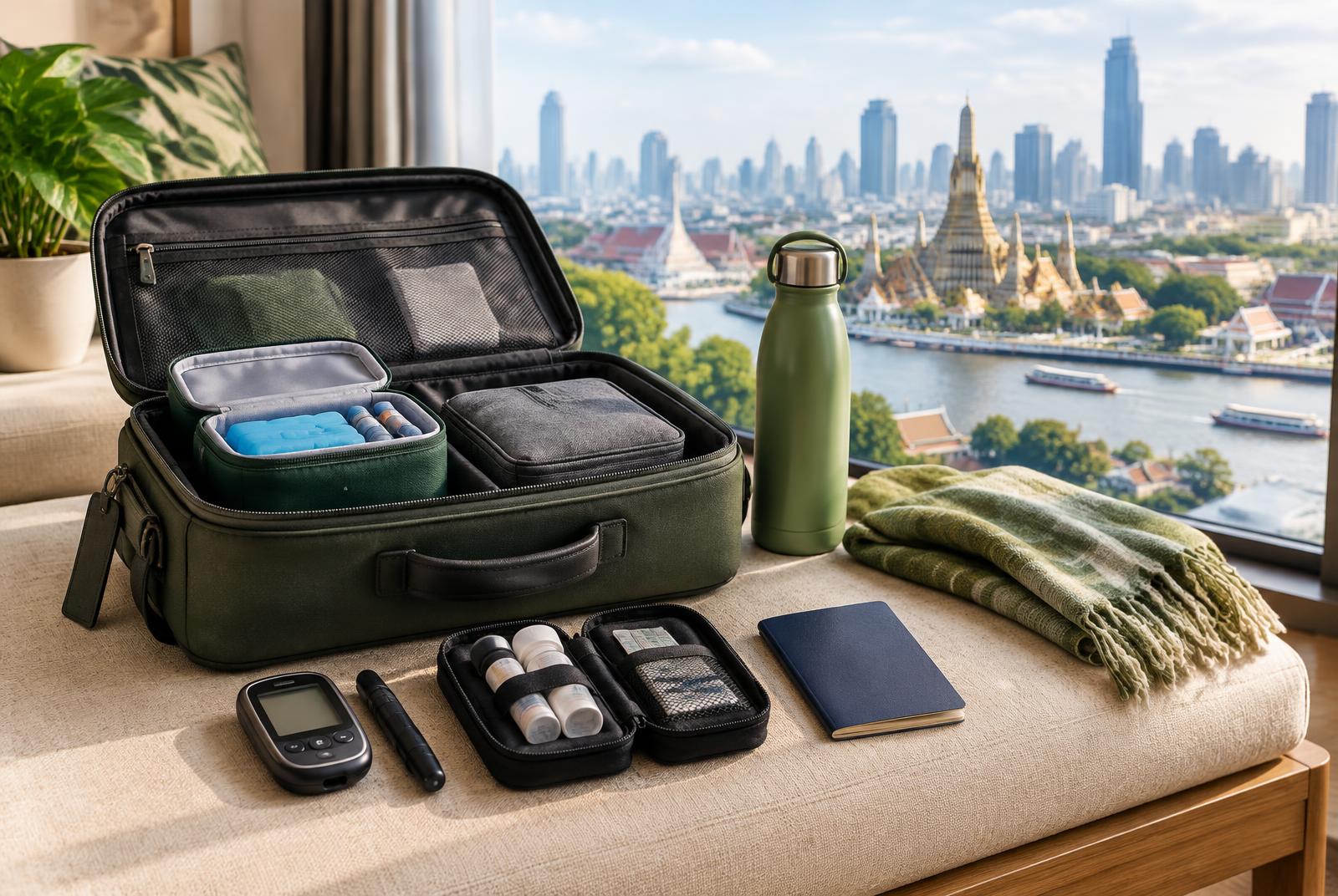
Time zones, long flights, heat and unfamiliar meals can disrupt diabetes routines. A written plan makes those changes easier to manage without guessing doses.
Medically reviewed by the Bangkok Stem Cell Center medical team
Bangkok travel may combine a long flight, a major time-zone change, warm weather and unfamiliar food. None of those automatically prevents a person with diabetes from travelling, but together they can disturb a routine that normally keeps glucose stable. Preparation should begin with the clinician who prescribes insulin or glucose-lowering medicine.
Create a diabetes time-zone plan for Bangkok
There is no safe universal formula for changing insulin times. The plan depends on direction of travel, journey length, insulin type, pump settings, meal timing and the risk of low glucose. Ask for written instructions for the travel day, arrival day and return journey. Keep watches or phone reminders clearly labelled so home time and Bangkok time are not confused.
Pack diabetes supplies in your hand luggage
- More insulin or other medicine than the itinerary requires, allowing for delay
- Glucose meter, strips, lancets and spare batteries where applicable
- Continuous glucose monitor supplies and a backup way to check glucose
- Fast-acting carbohydrate and longer-lasting snacks
- Ketone testing supplies when recommended for the person's diabetes type
- Prescription copies, a medicine list and a clinician's travel letter
Split supplies between two hand-luggage bags when travelling with a companion, but keep each essential item accessible. Checked baggage can be delayed and may expose medicine to unsuitable temperatures.
Protect insulin from heat during Bangkok travel
Insulin should not be left in a parked car, direct sun or against a frozen ice pack. Use storage recommended by the manufacturer and diabetes team. Hotel-room refrigerators can freeze items placed against a cooling element, so check the arrangement rather than assuming every minibar is suitable.
Manage glucose as routines shift in Bangkok
Heat can alter hydration, appetite and sometimes insulin absorption. Walking more than usual may lower glucose, while disrupted sleep, illness and unfamiliar meals may raise it. Check glucose more often during the first days, carry treatment for low glucose, drink safe fluids and avoid making large medication changes from one unexpected reading.
Plan Bangkok meals while managing diabetes
Thai meals may combine rice or noodles, sauces, fruit and shared dishes, making carbohydrate amounts difficult to judge. Familiar portion-based methods, cautious correction and more frequent monitoring are safer than pretending an unfamiliar meal can be calculated exactly. People using mealtime insulin should discuss a practical strategy before travel.
Know your diabetes sick-day and emergency plan
- Carry written instructions for vomiting, diarrhoea, fever and persistent high glucose
- Know when to check ketones and when not to stop insulin
- Identify nearby urgent medical care before it is needed
- Wear or carry medical identification
- Teach a travel companion how to recognise and help with severe low glucose
Flying to Bangkok with diabetes: the honest bottom line
The goal is not to hold every reading perfectly steady during a long journey. It is to avoid preventable emergencies while adapting safely. A personal time-zone plan, protected medicines, backup supplies, frequent early checks and clear sick-day instructions provide a far safer foundation than changing doses by guesswork.
Frequently asked questions
Short, plain answers to the questions patients ask most — so you can read with clear expectations, not promises.
How should I change insulin timing for Bangkok?
Ask the clinician who manages your diabetes for a written plan based on your insulin, flight direction and journey length. A general online formula cannot safely account for those differences.
Can insulin go through airport security?
People routinely travel with insulin and diabetes equipment, but security procedures vary. Keep supplies accessible and labelled, and carry supporting documentation recommended by your clinician or airline.
Should I put insulin in checked baggage?
No. Checked bags can be lost or delayed and may experience damaging temperatures. Keep insulin and essential supplies in hand luggage.
Does Bangkok heat affect diabetes?
Heat can increase fluid loss and may change routines, activity and insulin absorption. Hydrate, protect medicine from temperature extremes and monitor more often while adjusting.
What if my glucose monitor fails abroad?
Carry spare supplies and a backup meter that you know how to use. Do not rely on being able to replace a specific device immediately after arrival.
When should I seek urgent care?
Seek urgent advice for severe or repeated low glucose, vomiting with inability to keep fluids down, significant ketones, breathing difficulty, confusion, or persistently very high glucose despite following the agreed sick-day plan.
Reviewed by Bangkok Stem Cell Center Medical Team | Last updated: October 2026
Travelling to Bangkok During Cancer Treatment: A Medical Planning Checklist
Travel during cancer treatment requires more than a flight and hotel. This checklist helps patients coordinate records, medicines, safety and follow-up before leaving home.
Considering Cancer Immunotherapy in Bangkok? Questions to Ask Before You Travel
The word immunotherapy covers very different treatments. Before travelling, establish exactly what is proposed, why it fits the diagnosis, and who will manage complications.